Shopping for Odisha’s Handloom and Crafts in Bhubaneswar: What to Buy and Where
Most visitors leave Bhubaneswar with photos of temples and nothing to carry home. That’s a pity, because Odisha has some of the oldest craft traditions in India, and a good part of it is sold within an hour of the city. This guide covers what to buy, where to find it, and how to avoid paying handmade prices for machine copies.
Where should you start shopping?
Start at Ekamra Haat. It is a craft bazaar in Bhubaneswar where artisans and cooperatives sell handloom and handicrafts in one place, with food stalls next to them. Fixed stalls mean you can compare before you buy, and the pace is calm. Go on a weekday afternoon and give it two hours. For more fixed-price options, look at the state-run emporia in the city, which sell handloom and handicrafts under official labels. Check the opening days before you go, since markets and emporia shut on different days.
What is Pipili appliqué?
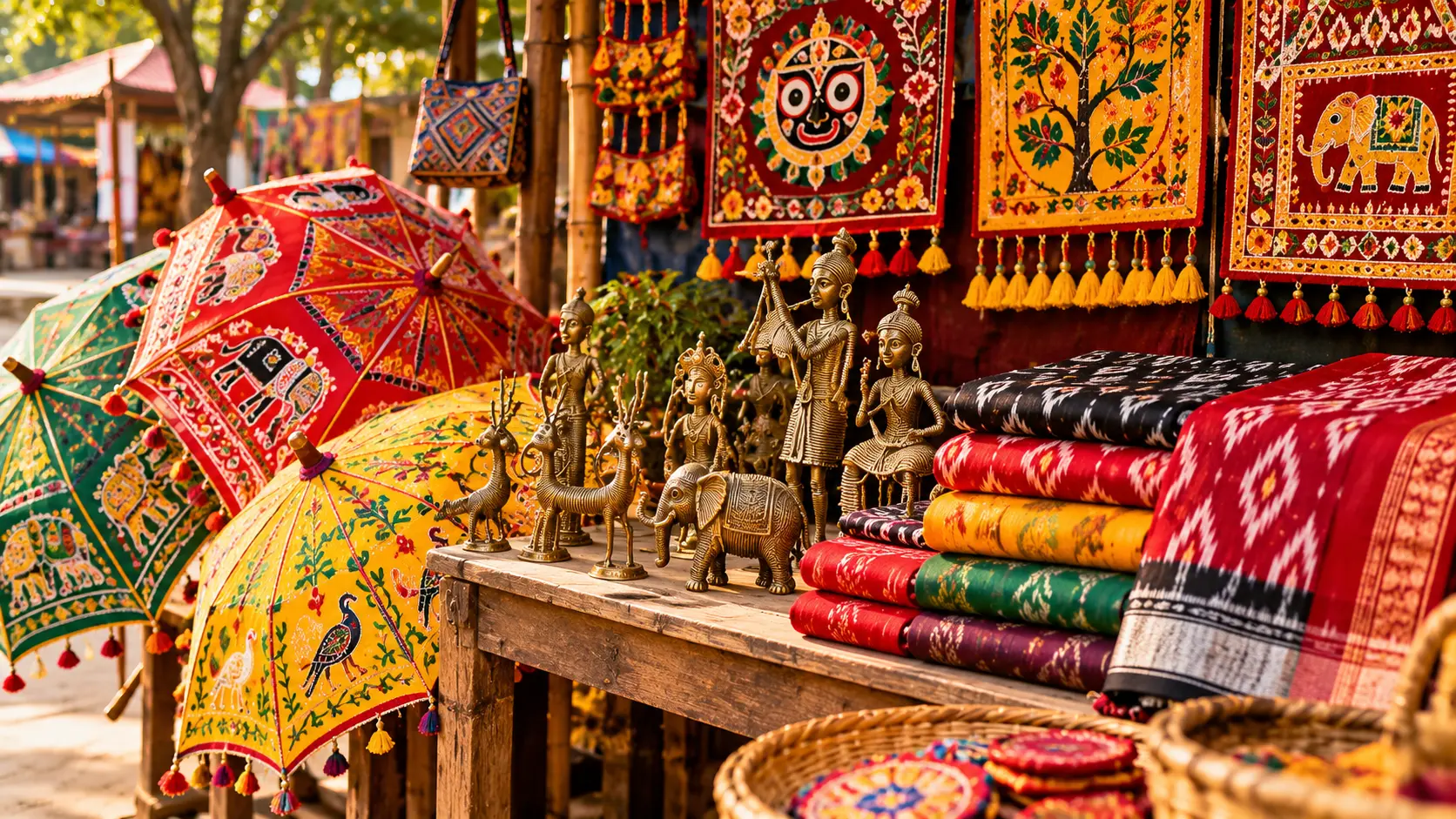
Pipili is a small town on the road to Puri, a short drive from Bhubaneswar, and it is known for appliqué work. Artisans stitch small pieces of brightly coloured cloth onto a base, and the result is canopies, lampshades, wall hangings, bags and umbrellas in red, yellow, green and blue, with patterns of birds, flowers and elephants. The work was originally made for temple chariots and processions. Look at the stitching on the back. Even, tight stitches mean careful work, and loose threads mean you should walk on. You can buy it in the city, but a stop at Pipili on the way to Puri lets you see it being made.
What is pattachitra?
Pattachitra is a style of painting on cloth or palm leaf, made with natural colours on a prepared surface. The subjects are the Jagannath tradition, Krishna and scenes from Hindu epics, drawn with bold outlines and fine borders. Raghurajpur, a heritage craft village near Puri, is the best known home of the art, and families there paint in their own houses. A good painting takes time, so a very low price usually means a printed copy. Hold it at an angle and look for brush marks and raised colour, because a print will be flat and glossy.
What about Sambalpuri ikat?
Sambalpuri is the weaving tradition of western Odisha, and ikat is the technique. The threads are tied and dyed before they are woven, so the pattern appears as the cloth forms and the edges of the design look slightly feathered, never sharp. You can find sarees, stoles, dupattas and fabric by the metre. A true ikat looks nearly the same on both sides of the cloth, while a printed imitation shows a clear front and a blank back. Cotton ikat is the practical buy in this climate, and silk is for special occasions.
What other crafts are worth looking for?
Dhokra is metal casting from the lost-wax method, producing small brass figures of animals, dancers and gods with a rough, earthy surface. Silver filigree, called tarakasi, is a speciality of nearby Cuttack, where thin silver wire is shaped into delicate jewellery and ornaments. Stone carving, horn work and palm-leaf engraving are also found in the markets around Puri and Konark. If you have limited luggage, filigree and small Dhokra pieces are the easiest to carry.
How do you spot the real thing?
Buy from cooperatives, emporia and artisans you can see at work, because middlemen add cost and take it from the maker. Many Odisha crafts, including Pipili appliqué, pattachitra and Sambalpuri ikat, carry geographical indication status, and a handloom mark or a maker’s tag on the cloth is a good sign. Ask who made it and how long it took. A seller who can answer in detail is usually honest. Compare two or three stalls before you pay, and don’t haggle hard with artisans selling their own work. The price is already low for the hours that went into it.
How do you plan the day?
Spend the morning at the temples or caves, and shop in the afternoon when the heat drops. Visit Ekamra Haat first, then go further out to Pipili if you have a car and the energy. A full craft day with Pipili and Raghurajpur means a trip towards Puri, so pair it with a day trip. Our guide to day trips from Bhubaneswar covers that route, and our 2-day itinerary shows how to fit shopping around the temples.
Where should you stay?
If you want a quiet base near AIIMS and the Khandagiri side of the city, Plorastay in Patrapada offers AC rooms, family suites, kitchens in selected rooms, free Wi-Fi, free parking and airport and railway station pickup. Reach us through the contact page to check availability.