Chasing the Cold: A Winter Road Trip from Bhubaneswar to Daringbadi, Odisha’s Misty Hill Station
You decide to go because someone says it gets cold.
In Bhubaneswar, that sounds like a joke. You’ve spent the afternoon sweating in a shirt, arguing with a ceiling fan. But a friend swears there’s a place in the hills where people wear shawls in the evening and the mornings arrive wrapped in mist. You laugh. Then you check the map. Then you pack a jacket.
The drive out is long, so you start early. The city thins out into fields, the fields into scrub, and the scrub into hills that come up slowly, as if they’re trying not to startle you. Somewhere in the second hour the air through the open window changes. It’s cooler, and it smells of wood smoke and damp earth. You turn off the AC without being asked.
The road that keeps climbing
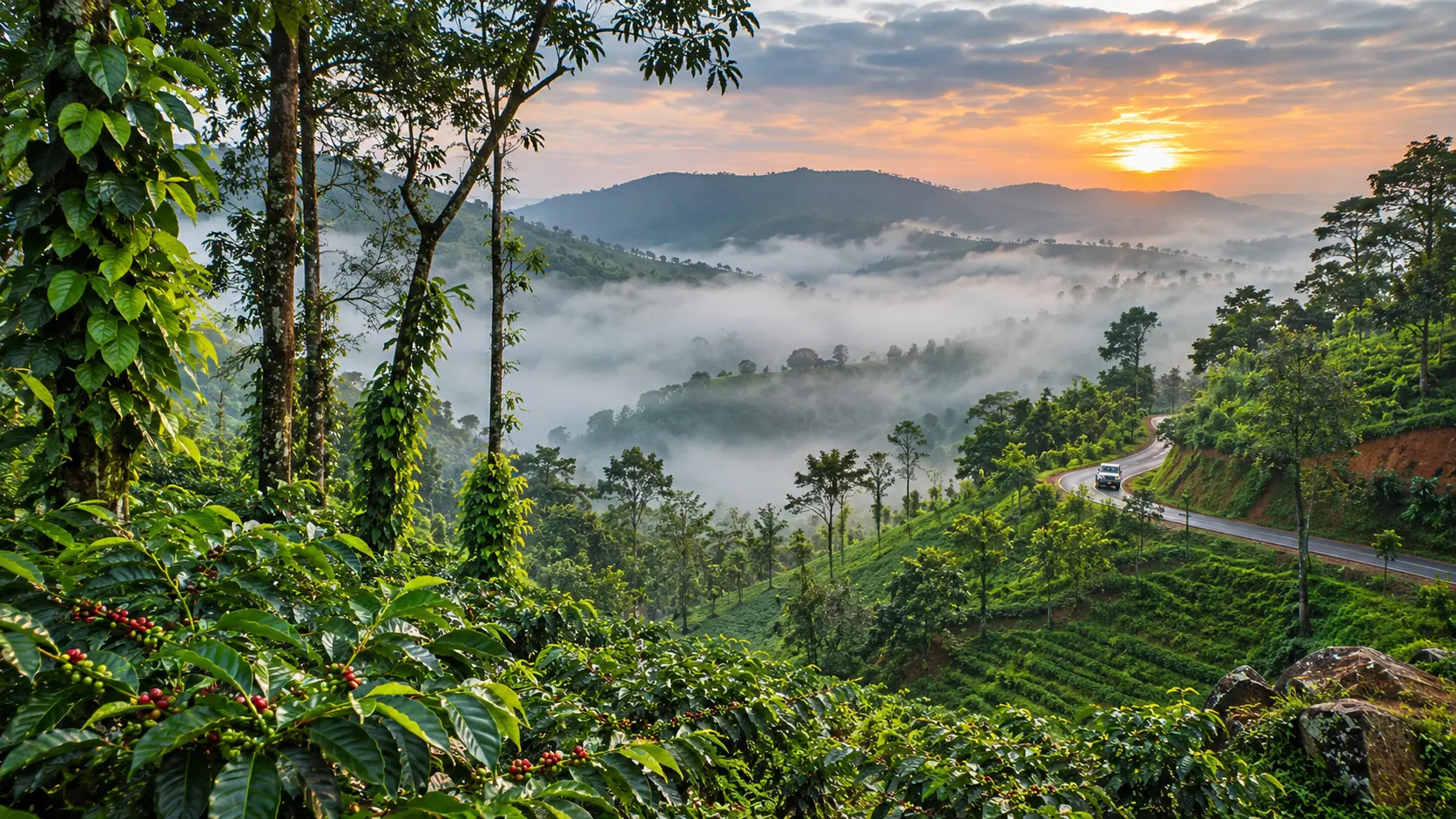
The last stretch is all curves. The road winds up through forest, doubling back on itself, with deep green drops on one side and rock face on the other. Every bend brings a new view and every view is a little paler than the last, the distant hills fading into blue, then grey, then a soft white that could be sky or could be cloud.
You pass a truck loaded with bamboo. A woman walking with a bundle of firewood on her head, steady as a postman. A bus so full that people are riding on the roof, one of them asleep. The driver slows down at each turn, lets the horn go once, and keeps climbing.
Then, quite suddenly, the car is inside a cloud.
Visibility drops to ten metres. The headlights make a small yellow room in the white. The driver doesn’t seem worried, so you try not to be.
Arrival
Daringbadi is a small town in the Kandhamal hills, often called the Kashmir of Odisha by people who clearly haven’t been to Kashmir and clearly love this place. It doesn’t look like much at first. A few shops, a market, a bus stop, tea stalls with steam rising from huge steel kettles. But step out of the car and the air hits you: cold, thin and clean, the kind that makes you stand up straighter.
You buy tea from the first stall you see. It’s sweet and strong and served in a glass too hot to hold, and you hold it anyway. A man next to you wearing a woollen cap nods at your jacket. “Good,” he says. “Tonight, you’ll need it.”
The plantations
Next morning you walk out before breakfast. The mist has settled into the valleys like water in a bowl, and the hills poke up out of it as dark green islands. It’s cold enough that you can see your breath, and you spend a ridiculous amount of time doing exactly that.
The slopes around town are planted with coffee and pepper, rows of glossy bushes on the hillsides and vines wrapped round tall trees. A local guide, who tells you he’s been walking these paths since he was eight, shows you how the coffee berries ripen from green to a deep red. He picks one, splits it open with a thumbnail and holds it out. The seed inside is pale and smaller than you expected.
“It takes patience,” he says. “Everything here takes patience.”
You walk among the plants until the sun burns off the last of the fog. The valley appears below you, layer on layer of green, and for a moment nobody says anything.
The waterfalls and the walk
The afternoon is for water. A path leads down through forest to a waterfall that you hear long before you see. The sound grows from a murmur to a roar, and then the trees open and there it is, white water falling over dark rock into a pool so clear you can see the stones on the bottom.
The spray is cold. You stand close enough to feel it on your face and then step back, laughing, because the air around the falls is colder than the mountain.
Getting there takes effort. The path is steep and slippery in places, and you grab at roots and branches more than once. Wear proper shoes. Take your time. The reward is a quiet that no town can give you, where the only sounds are water and wind and your own breathing.
The village and the market
On the way back you stop at a small village and a weekly market, where local families sell vegetables, forest produce, handwoven cloth and bundles of dried things you can’t identify. The traders are curious about you and you’re curious about them. A woman laughs when you point at an unfamiliar vegetable and tries to explain how to cook it, and you understand maybe a third of it, and agree with all of it.
You buy a bag of pepper, a jar of honey and a woven mat you have no space for. You’ll find room.
The evening cold
By dusk the cold has teeth. The sun drops fast behind the hills and the mist rises again from the valleys, creeping over the road, swallowing the lights one by one. Someone lights a fire outside a tea stall and a small crowd gathers around it, hands stretched towards the flames.
You join them. Nobody asks where you’re from. A kettle passes round. Somebody starts to sing, low and unhurried, and a few others pick it up.
Later, in your room, you pull the blanket up to your chin and listen to the quiet. No horns. No generators. Just wind in the pines and the faint tick of a cooling roof.
You think: I came for the cold. And you realise it was never really about the cold.
Heading home
The drive back is slower, partly because of the road and partly because nobody wants to leave. The hills fall away behind you and the air warms by degrees, until somewhere in the plains you find yourself reaching to turn the AC back on. You don’t. You open the window instead, and breathe the last of the mountain through it.
Bhubaneswar comes up out of the dusk, bright and loud and familiar. You step out of the car into a warm evening, and for a second you feel the loss like a small ache.
Then you smell street food, and the ache goes away.
If you want to go
Check the season. Winter, roughly November to February, is when the cold and mist are at their best. Confirm conditions before you travel.
Plan for a long drive. It takes most of a day each way from Bhubaneswar, so break the journey or stay at least one night.
Carry warm clothing. Mornings and evenings are properly cold, and mist makes it feel colder.
Wear sturdy shoes for waterfall walks, and don’t go near the edge in wet weather.
Book stays and guides ahead in peak season, and confirm road and weather conditions locally.
Respect the villages. Ask before photographing people, and carry your rubbish out.
This is a travel narrative, written to capture the feel of the trip. Details of the people and places are illustrative, so check current facts locally before you plan.
The Plorastay team writes from Patrapada, Bhubaneswar, where our guest house offers AC rooms, kitchens in selected rooms, free parking and airport pickup for travellers planning trips like this.